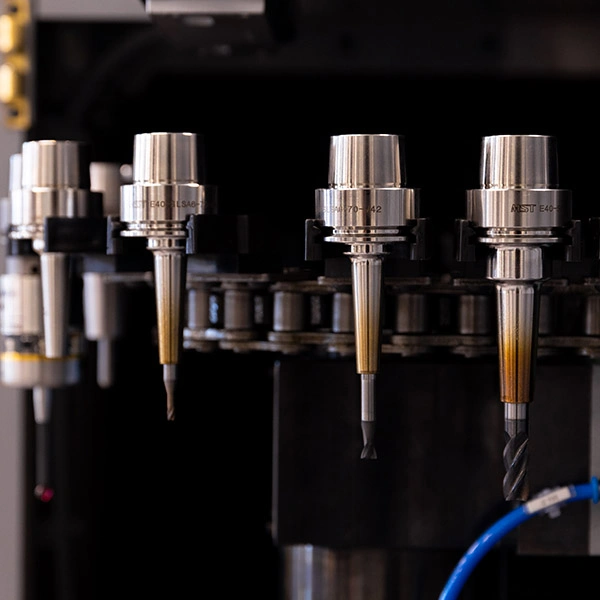
Micron-level machining at Tumag in Turnhout
At Tumag, we combine High Speed Machining (HSM) with in-depth expertise in CNC machining, mould making and precision mechanics. From our facility in Turnhout, we produce highly accurate components for customers in Belgium and the Netherlands who demand the highest standards in precision, surface quality and reliability.
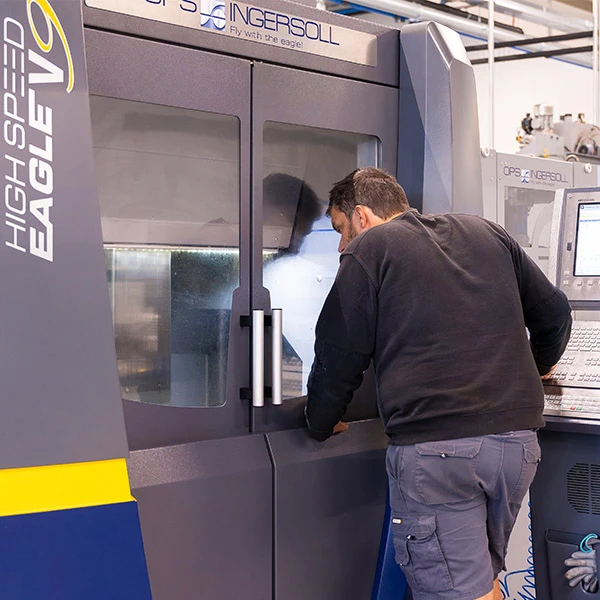
Using advanced five-axis HSM machines, we produce complex components with tolerances down to the micron level. Our technology is used, among others, for the production of:
- mould components
- cutting dies and precision tools
- precision mechanical components
- electrodes for EDM spark erosion
- complex 3D geometries in hardened steel
Thanks to high spindle speeds, optimized toolpaths and a precisely controlled production process, we deliver components that meet the most demanding requirements in sectors such as healthcare, aerospace and the high-end electronics and automotive industries.
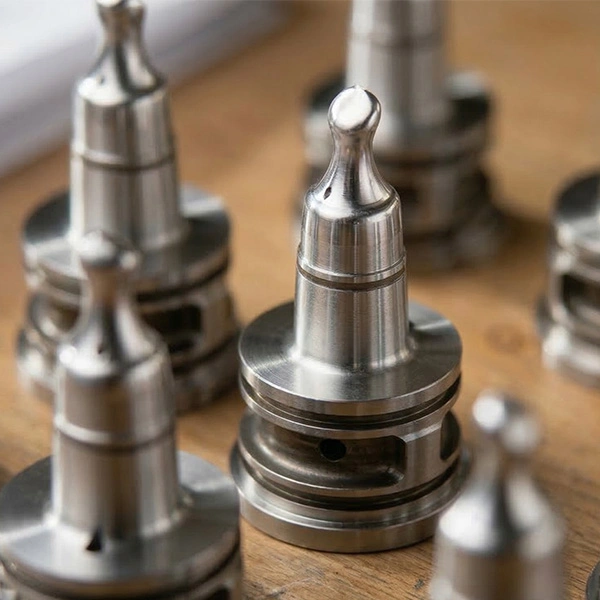
What is HSM milling (High Speed Machining)?
High Speed Machining, often abbreviated as HSM milling, is one of the most advanced disciplines within CNC milling. At Tumag, this technology forms an essential part of our precision mechanical production.
Thanks to many years of experience and a well-equipped machine park, we can produce complex components that meet extremely high requirements in terms of accuracy and surface quality as well as process stability.
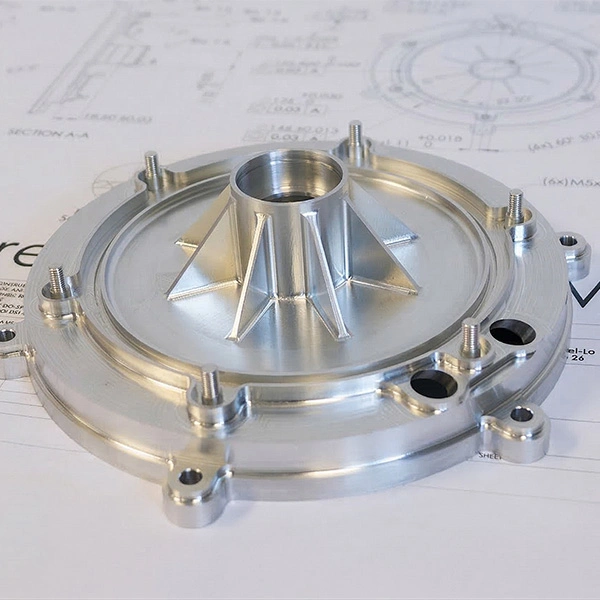
High Speed Machining (HSM) vs Conventional Milling
In conventional milling, the focus is on relatively low spindle speeds and larger chip thicknesses. HSM milling works exactly the opposite:
- very high spindle speeds,
- higher feed rates
- significantly smaller chip thickness
The lower cutting forces ensure that the tool is subjected to less stress and that heat is removed more effectively through the chip rather than entering the workpiece. As a result, both the tool and the material remain in optimal condition during machining, providing direct benefits for accuracy and tool life.


The advantages of HSM milling for precision components
Superior surface quality
Thanks to the high spindle speeds and small chip thickness, extremely fine surface finishes can be achieved, ideal for mould components, precision mechanical parts and complex geometries.
Exceptional dimensional accuracy
Because the process is much more stable and heat is removed through chip evacuation, the workpiece is not subjected to thermal stress. This ensures consistent dimensional accuracy and minimal deformation.
Ideal for thin-walled and complex components
Thanks to the low cutting forces, HSM generates significantly less vibration. This makes it possible to efficiently and accurately mill thin walls, sharp details, delicate structures and complex 3D surfaces.
Higher productivity through HSM milling
Although smaller chip thicknesses are used, HSM provides a significant advantage in cycle time thanks to the high feed rates and spindle speeds.
HSM milling at Tumag: precision machining for moulds and precision mechanics
At Tumag, we apply High-Speed Machining for the production of complex and precise components that require a top-quality finish. Our experience ranges from mould components to precision mechanical parts and special electrodes for electrical discharge machining (EDM).
Machining of hardened steel up to 60 HRC
We machine hardened steel up to 60 HRC without difficulty, which is essential for mould making and high-end tooling where wear resistance is a key factor.
Production of electrodes for EDM
In addition, our HSM department also produces sinker EDM electrodes in:
- Graphite
- Copper
- Tungsten copper (Elconite)
These components are later used in our EDM machines during sinker EDM, ensuring a streamlined and perfectly coordinated internal production flow.
Hardened steel grades where HSM milling makes the difference
For many hardened tool steels, conventional CNC milling quickly becomes inefficient as hardness increases. Due to the combination of high wear resistance, hard carbides and thermal loads, rapid tool wear and unwanted heat build-up in the workpiece can occur. In these situations, High Speed Machining (HSM) offers decisive advantages.
Thanks to higher cutting speeds, lower radial cutting forces and optimized milling paths, heat is largely removed through the chip rather than penetrating into the material.
Typical steel grades where HSM milling performs exceptionally well include:
- 2379 (D2 / X153CrMoV12) – Wear-resistant cold work tool steel for dies and cutting tools.
- K390 (PM steel) – Powder metallurgy steel with extremely high wear resistance and toughness.
- 2080 (D3 / X210Cr12) – Very hard cold work tool steel with a high carbide content.
- 2363 (A2) – Cold work tool steel often hardened to around 60 HRC.
- 2344 (H13) – Widely used hot work tool steel for moulds and high-end tooling.
- 2367 – Tough hot work tool steel with excellent thermal stability.
- Vanadis 4 Extra – PM steel with a perfect balance between wear resistance and toughness.
- Vanadis 10 – Extremely wear-resistant powder metallurgy tool steel for the most demanding applications.
These materials are typically hardened to levels ranging from 50 up to 65+ HRC. It is precisely in this extreme range that HSM (hard milling) excels in producing complex shapes, precise contours and mirror-like surface finishes. Thanks to its stable process, HSM is the ideal choice for demanding applications in mould making, die making and precision mechanics.
Steel grades and typical hardness levels
| Steel | Typical HRC |
| 1.2344 | 48–54 |
| 1.2367 | 50–54 |
| 1.2363 | 58–60 |
| 1.2379 | 58–62 |
| Vanadis 4 | 58–62 |
| Vanadis 10 | 60–64 |
| K390 | 62–65 |
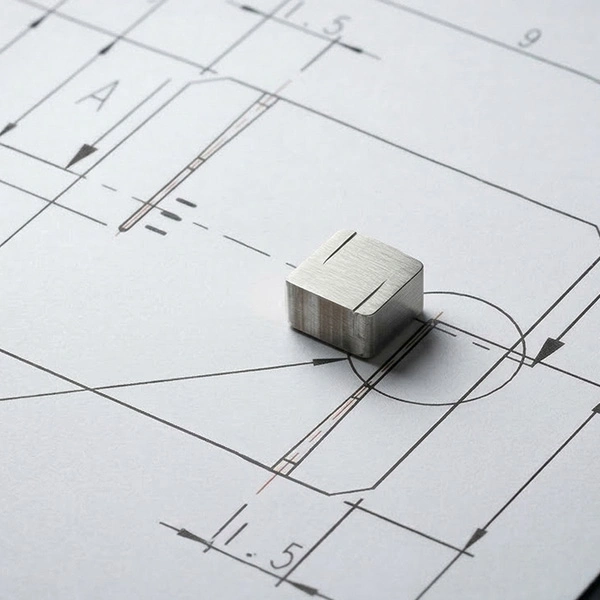
Tumag as a partner for complex HSM milling projects
When your project requires extreme precision, perfect surface quality and top-level craftsmanship, HSM milling is the right technique — and Tumag the ideal partner. We manage the entire process, from raw material to high-quality finished product.
Are you looking for a reliable partner for the production of complex components? Look no further and trust Tumag.
Frequently Asked Questions about HSM milling (FAQ)
What is HSM milling?
HSM milling (High Speed Machining) is a specialized machining technique that uses very high spindle speeds and feed rates. Due to the lower chip thickness and higher cutting speeds, more complex shapes can be produced with better surface quality and higher accuracy.
When is High Speed Machining used?
HSM is mainly used in the production of moulds, dies, precision mechanical components and complex 3D shapes in hardened materials. The process is particularly suitable for applications where high precision and surface quality are required.
Which materials can be milled with HSM?
With HSM milling, various materials can be machined, including hardened steel, aluminium, copper, graphite and various technical alloys. At Tumag, we machine steel up to 60 HRC without difficulty.
Where is HSM milling applied?
HSM milling is used for, among others:
- matrijzenbouw
- Cutting dies
- precision mechanical components
- electrodes for EDM
- complex precision components
Are conventional milling and HSM milling applied to the same workpiece?
Yes, in many production processes, conventional milling and HSM milling are combined on the same workpiece. Both techniques have different roles within the machining process.
In the first phase, conventional CNC milling is often used for rough machining. During this step, most of the material is removed and the component receives its basic shape.
After that, intermediate steps may follow, such as: heat treatment or hardening, grinding of reference surfaces or mating surfaces.
In the final phase, the component is finished using HSM milling. This technique is particularly suitable for the precise milling of complex shapes in hardened steel, with very high dimensional accuracy and a fine surface finish.
Through this combination of techniques, an efficient production process is achieved in which both productivity and precision are maximized.