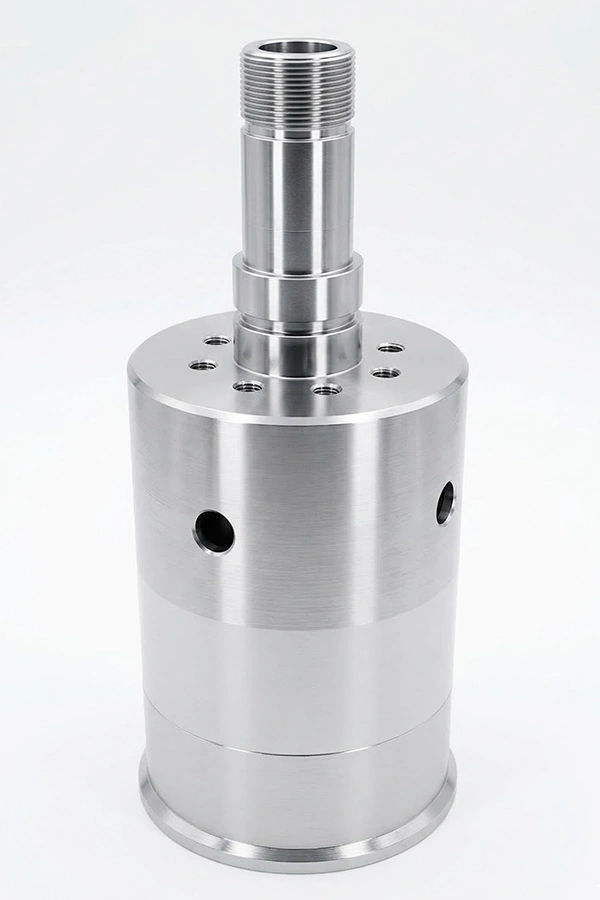
Precision turning with advanced CNC technology
Within the precision engineering industry, CNC turning is an essential technique for producing complex cylindrical components. At Tumag in Turnhout, we manufacture turned parts that meet the extremely high tolerance requirements of mould making and tool and die making.
With a modern machine park, robust clamping systems and advanced control technology, we achieve perfect runout accuracy, extremely precise diameters and superior surface finishes (low Ra values). Whether it concerns unique prototypes, complex one-off parts or medium-sized production runs, we guarantee absolute repeatability.
Since CNC turning is often just one step in the realization of a complete precision-engineered component, this department integrates seamlessly with our other disciplines such as CNC milling, EDM and cylindrical grinding.

Turn-milling: turning and milling in a single setup
A key advantage of our CNC turning machines is the presence of a milling spindle and driven tools (turn-milling). This means the process is not limited to rotationally symmetrical operations. On the same machine, we can directly drill hole patterns, tap threads, machine keyways or mill asymmetric surfaces.
Mill-turning offers major advantages for complex components:
- Absolute accuracy: Because the workpiece remains clamped in the chuck and does not need to be transferred to a second machine, no re-clamping errors occur.
- Shorter lead time: Multiple operations are performed in a single efficient cycle.
- Design freedom: Ideal for producing highly complex, combined geometries.
- Improved surface quality due to stable process conditions
Materials and tolerances down to micron level
To ensure quality in high-precision production, our CNC programmers work with the latest CAD/CAM software (such as Siemens NX). This allows us to simulate and optimize material behavior, tool wear and cutting forces in advance. We perform turning and mill-turning on a wide range of materials, including:
- Tool steel and stainless steel (such as stainless steel 316)
- Difficult-to-machine metals (titanium, Inconel)
- Non-ferrous metals (aluminium, copper, brass)
- Engineering plastics (PEEK, POM)


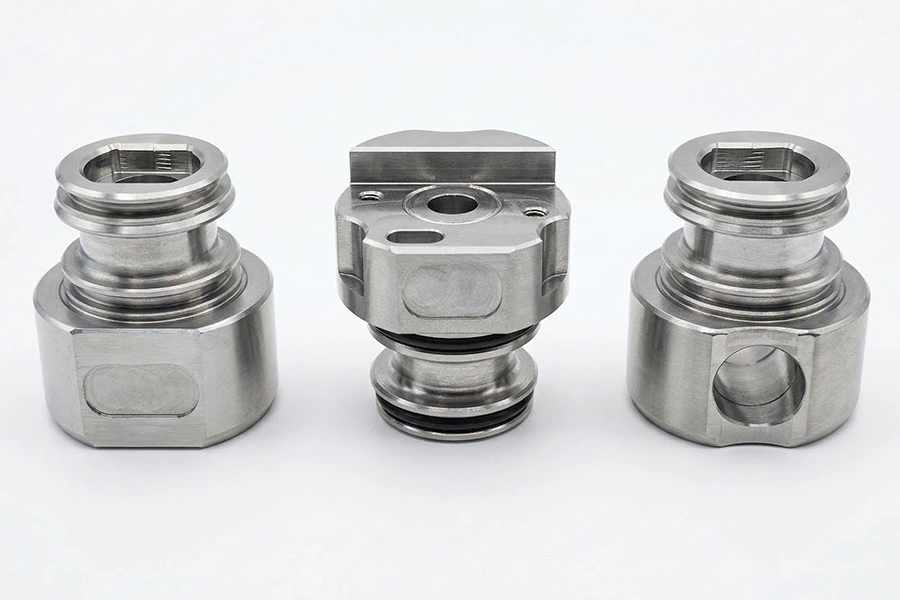
Typical industrial applications
Our turning facilities produce critical components on a daily basis that are used in high-end final products. Typical applications include:
- Mould making: Ejectors, guide bushings, injection nozzles, tapered pins and cylindrical mould cores.
- Tool and die making: Hardened cutting punches, punch housings and guide pillars.
- Medical sector: Precision instruments and surgical components manufactured from stainless steel and titanium.
- Aerospace: Complex turned and milled components made from heat-resistant alloys.

Tumag as your partner for turning operations
Whether it concerns small elements for precision engineering applications, larger turned parts with complex geometries or high-precision components for sectors such as healthcare, packaging and the high-tech industry: Tumag masters every aspect of CNC turning. We ensure a fast, efficient and highly precise process — from raw material to a perfectly finished end product.
Would you like to know how we can support you with CNC turning, or would you like advice on the best machining strategy for your component?
Feel free to contact us — we are happy to think along with you and are ready to realize your project with the utmost care and precision.
A skilled team that elevates quality
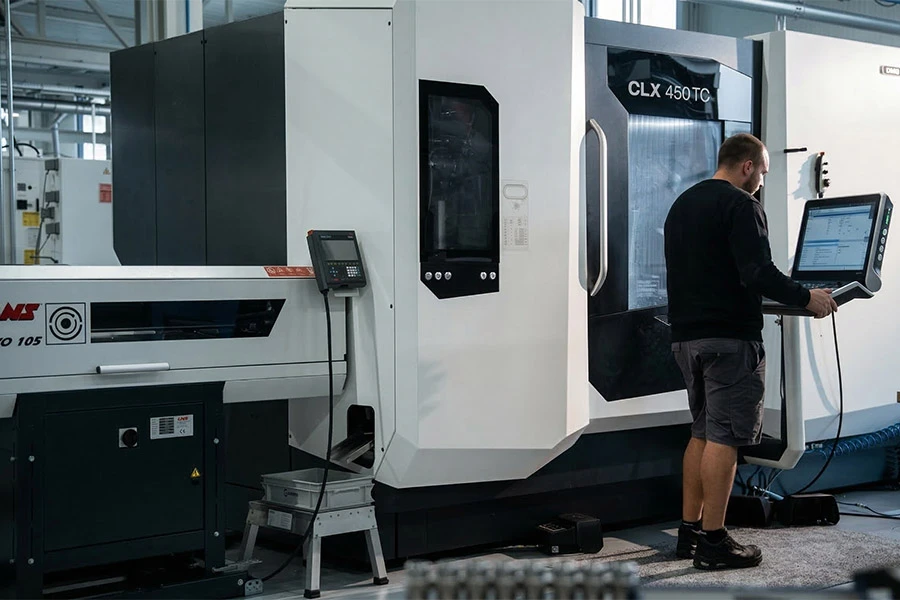
In addition to modern technology, the craftsmanship of our people is at the heart of Tumag. Our technicians have years of experience in CNC turning and know exactly how to approach each job from a technical perspective. They pay attention to the details that make the difference: the influence of heat, the behavior of different materials, the optimal tool selection and the correct clamping setup.
By combining this expertise with modern quality control — including high-precision measuring equipment, in-process inspections and full documentation — we can guarantee consistently high quality for every customer and every project.
Frequently Asked Questions about CNC turning (FAQ)
What is the difference between CNC turning and CNC milling?
In CNC turning, the workpiece rotates at high speed in the chuck, while the cutting tool remains stationary or moves linearly to remove material. This makes it ideal for round or cylindrical shapes. In CNC milling, the workpiece is fixed on a table and the cutting tool rotates to create complex, flat or 3D shapes.
What is turn-milling?
Turn-milling combines both techniques in a single machine. Our CNC lathes are equipped with driven tools. This allows us to drill holes, tap threads or mill asymmetric surfaces directly while the part remains clamped in the lathe. This reduces setup time and significantly increases accuracy.
What tolerances can you achieve with CNC turning?
For high-end precision engineering and mould components, we can achieve tolerances down to micron level. Diameter, cylindricity and runout accuracy are strictly controlled and subsequently validated in our climate-controlled measuring room.
Do you also machine hardened or exotic materials on the lathe?
Yes. In addition to standard materials such as aluminium and structural steel, we specialize in machining difficult-to-machine metals such as titanium, Inconel, stainless steel 316, and highly alloyed hardened tool steel.