
Cost-efficient and sustainable solution
Thanks to our expertise in laser welding, we can efficiently repair worn or damaged mould components and other precision mechanical parts, often eliminating the need for complete replacement. This results in lower costs and reduced downtime in your production process. Moreover, repair is often a more sustainable solution than producing new parts, as it saves both materials and energy. This technique is commonly used in sectors such as mould making and precision engineering.
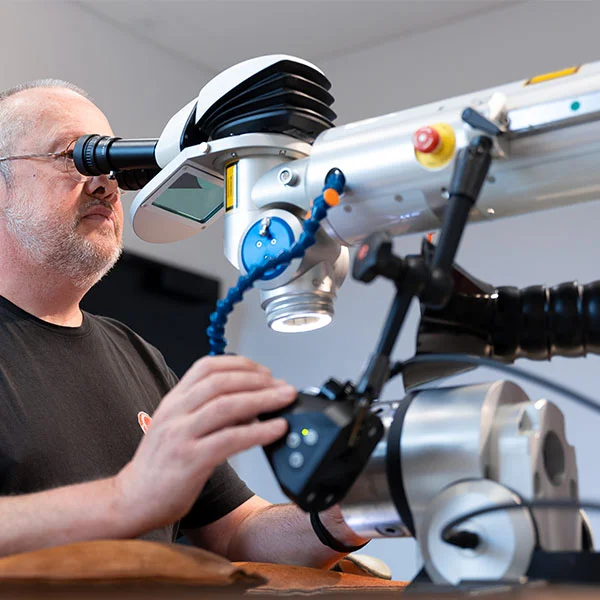
Laser cladding technology
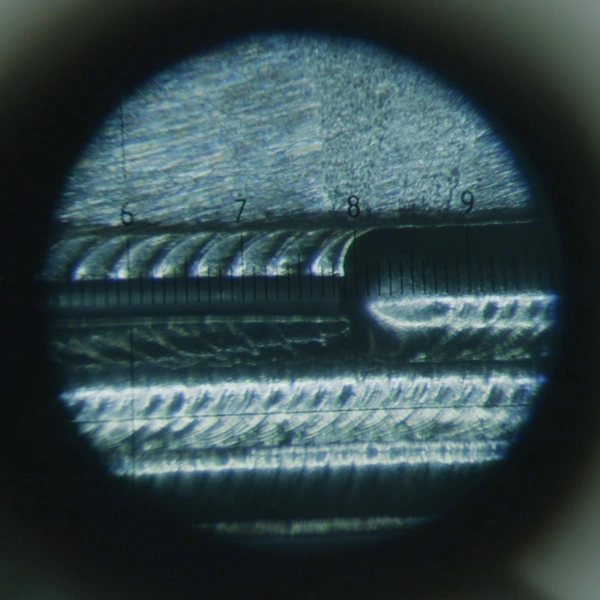
Laser welding is an extremely precise welding technique that uses highly concentrated, high-power laser light. This modern joining technology makes it possible to add material with exceptional precision or to permanently join components together.
At Tumag, we mainly use laser welding to repair mould components, precision mechanical components and other high-quality industrial parts. Because we work with an open system, we can also weld large components.
Why choose laser welding?
The reason we deliberately choose laser welding technology at Tumag lies in the technical advantages it offers compared to traditional welding methods such as TIG or MIG welding.
- Very low heat input
- Minimal heat-affected zone (HAZ)
- Limited material distortion
- Virtually no discoloration or oxidation
- High precision for thin-walled or complex components
- Less post-processing required
Because the melt pool in laser welding is much smaller, the structure of the base material is optimally preserved. This is particularly crucial for moulds, precision components and high-quality tools where tolerances are extremely tight.
Suitable materials for laser welding
Our specialists have extensive experience in laser welding a wide range of metals and alloys. Among others, we weld:
- Steel (and steel alloys) – such as K390, 1.2311 and 1.2312, Stavax 2083, Tyrax, Toolox 33, Orvar, 2767
- Stainless steel (SS) – including GS4571 and RVS316L certified for medical applications
- Inconel
- Titanium
- Aluminium
- Copper and bronze – such as Amco
Thanks to our material expertise, we can set the correct parameters to achieve an optimal welding result, with maximum adhesion, minimal stress build-up and a durable clad layer.


Applications of our laser welding technology
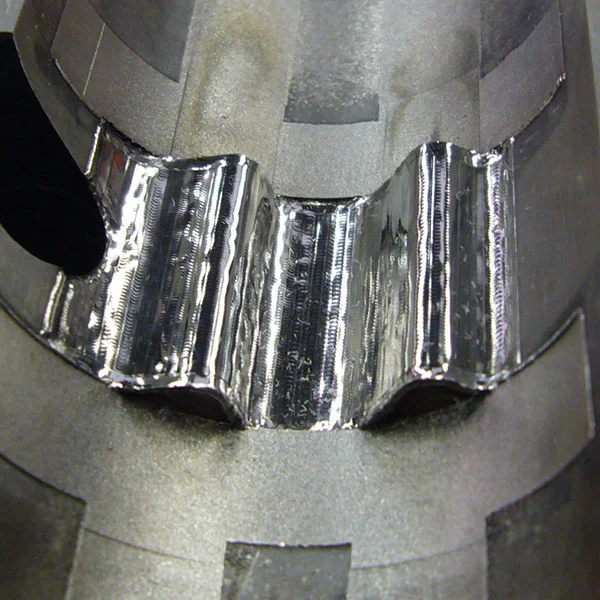
Laser welding as the first step in the repair process
The damaged component is first thoroughly prepared and cleaned. We then add material to the damaged area with high precision, without unnecessarily stressing the surrounding material.
After laser cladding, additional processes such as milling, sinker EDM (EDM), grinding and polishing can be carried out. These finishing operations ensure that the repaired component once again meets the required tolerances and surface quality, allowing the part to look like new again and function perfectly within the mould or machine.
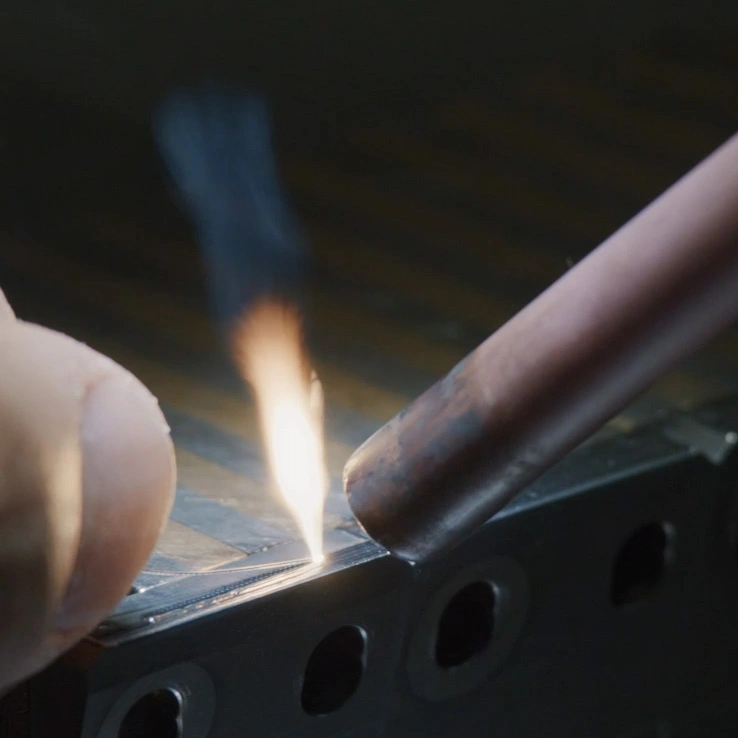
Functional laser cladding
In addition to standard repairs, we also use laser cladding to technically improve components. With this technique, a specific alloy is precisely built up on the surface of a workpiece. Examples of applications include:
- Cladding of hard, wear-resistant layers on moulds, tools and machine components exposed to intensive friction or abrasive wear. We can achieve hardness levels of up to 60 Rockwell.
- Build-up of bronze layers or copper alloys for improved electrical or thermal conductivity
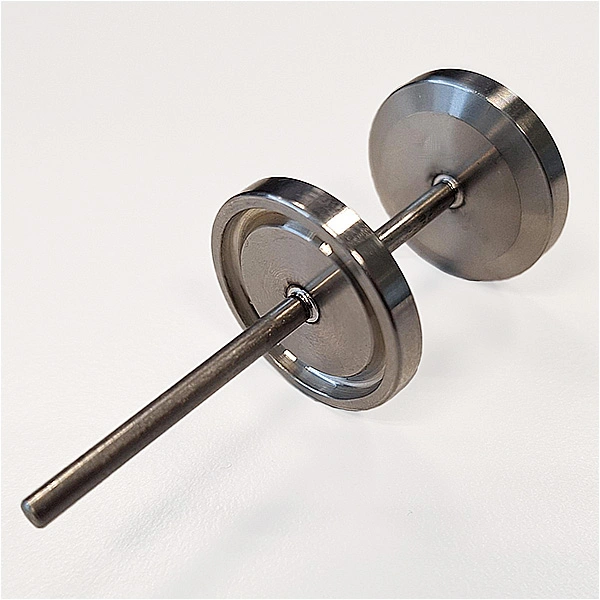
Precision mechanical application of laser welding
Because laser welding allows extremely fine and precise work, this technique is ideally suited for assembling very delicate components. The weld seams in the workpiece are also very clean and there are no welding spatter droplets.
Through laser cladding, we can add material in a highly controlled manner with minimal heat input. As a result, the structure of the base material is preserved and a strong metallurgical bond is created between the base material and the clad layer.
24-hour laser welding service for urgent repairs
Do you need an urgent repair for a mould or critical machine component? We ensure a rapid intervention and efficient repair so that your production process can be operational again as quickly as possible. Our fast service combines:
- Rapid diagnosis
- Immediate scheduling
- High-quality repair
- Minimal downtime
This ensures a reliable and sustainable solution, even in urgent situations.
Frequently asked questions about laser welding (FAQ)
What exactly is laser welding?
Laser welding is a welding process in which a concentrated laser beam is used to locally melt metal and join components with high precision or add material.
Why choose laser welding?
At Tumag, we deliberately choose laser welding technology because of its clear technical advantages compared to traditional welding methods such as TIG or MIG welding.
Due to the highly concentrated laser beam, the heat input is very low. As a result, the heat-affected zone (HAZ) remains limited and material distortion is minimized. Surface discoloration and oxidation also remain very limited.
When is laser welding the best choice?
Laser welding is ideal for precision components, thin-walled materials, moulds and repairs where minimal distortion is crucial.
What is laser cladding?
Laser cladding, also known as laser cladding, is a technique in which a new metal layer is built up on a workpiece using a laser. This layer can be more wear-resistant, corrosion-resistant or provide improved conductivity. As a result, components can not only be repaired but also technically enhanced.
Do you also repair components that were not produced by Tumag?
Yes. Tumag can also repair mould components and parts that were not produced by us. We are happy to assist you with our precision welding expertise.
Can you also carry out urgent repairs?
Yes, we offer a 24-hour laser welding service for urgent repairs so that your production process can resume as quickly as possible. Need an urgent repair? Call us at +32 (0)14 63 98 50.
Which materials can be laser welded?
We weld steel and steel alloys (such as K390, 1.2311 and 1.2312, Stavax 2083, Tyrax, Toolox 33, Orvar, 2767), stainless steel (such as GS4571 and RVS316L certified for medical applications), as well as Inconel, titanium, aluminium, copper and bronze (such as Amco).
Thanks to our material expertise, we can set the correct parameters to achieve an optimal welding result, with maximum adhesion, minimal stress build-up and a durable clad layer.