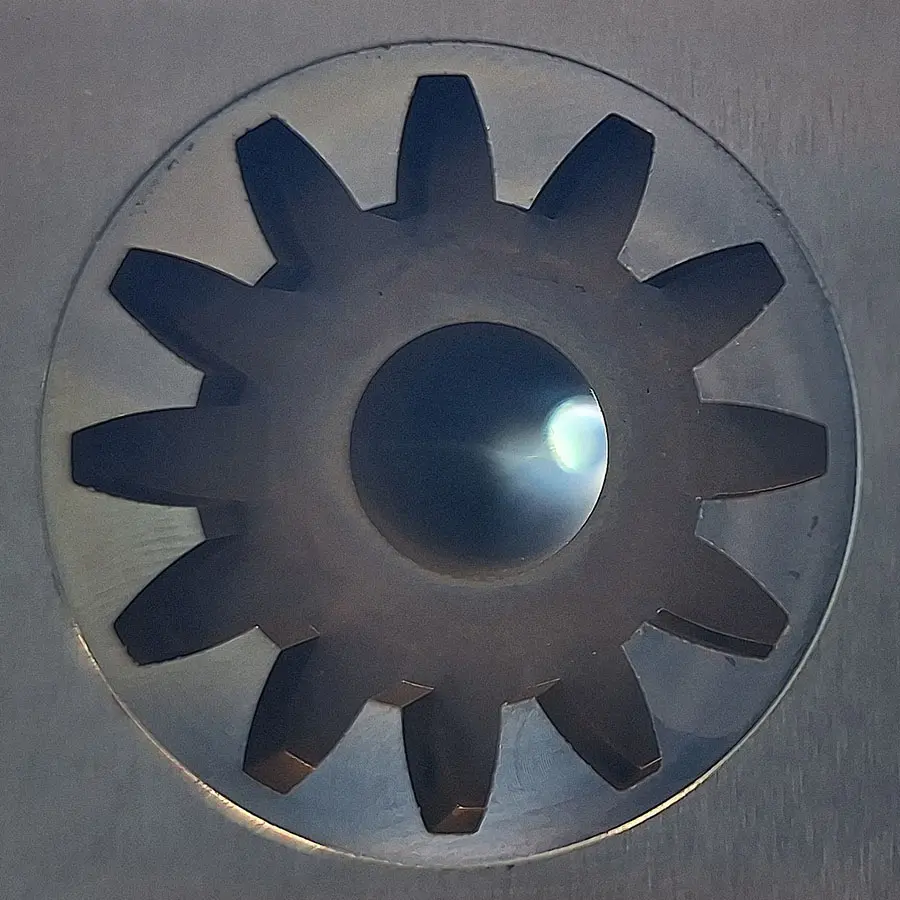
Contactless precision at micron level
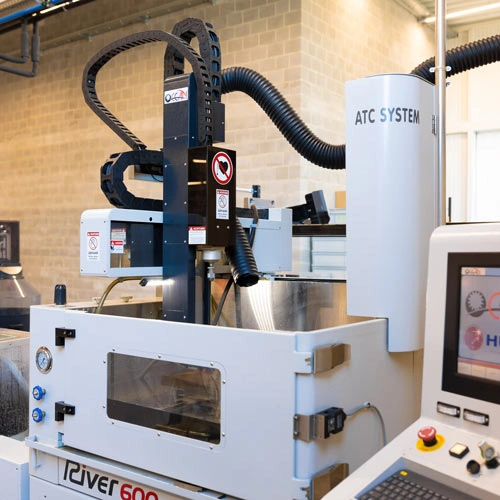
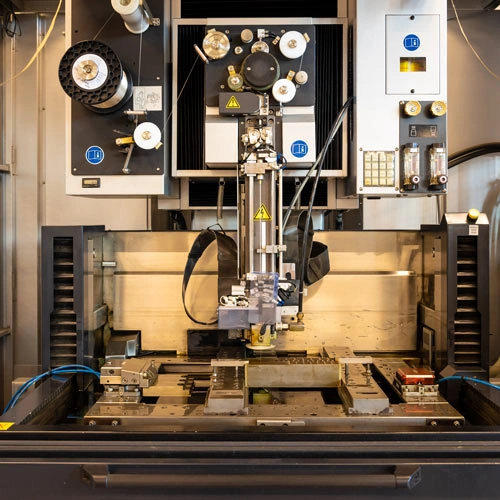

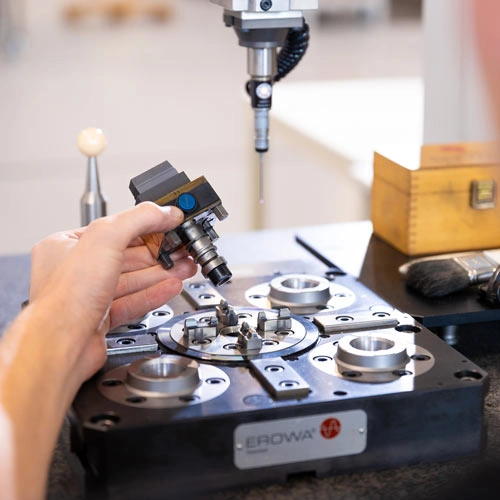
Some precision mechanical components require machining without physical force being applied to the workpiece. EDM machining, or spark erosion, shapes the hardest metals using controlled electrical sparks instead of mechanical pressure. By controlling electrical current and dielectric fluids, we create sharp internal corners, microscopic holes and deep cavities, even for specifications that allow no margin for error.
What is EDM machining?
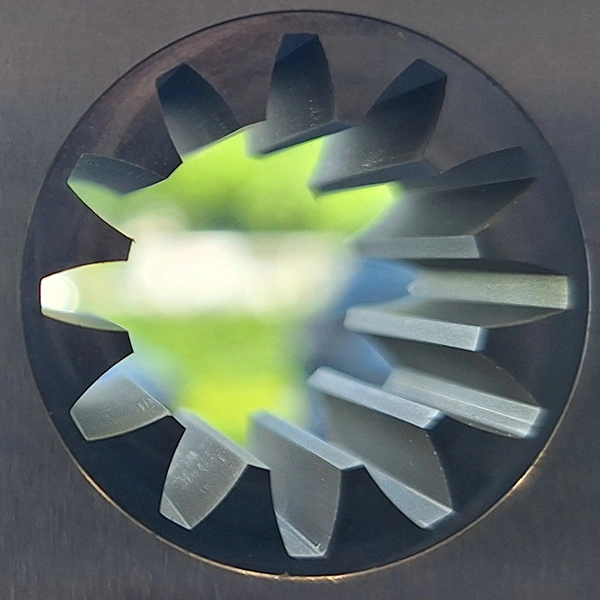
Electrical discharge machining is the collective term for machining processes that remove material using controlled electrical sparks instead of mechanical force. The technique is also known as spark erosion or EDM (Electrical Discharge Machining) and machines the hardest conductive metals contactlessly and stress-free, down to micrometre precision.
Integrated EDM machining: more than the sum of individual processes
At Tumag, we therefore fully integrate EDM machining into our broad expertise in precision engineering and high-quality mould making. Our EDM techniques also form an essential link within our cutting and stamping technology. By combining these disciplines, we achieve an exceptionally high level of accuracy, reliability and reproducibility for the most demanding sectors.
Sinker EDM is ideally suited for producing complex shapes, deep cavities and fine details in very hard materials. By using precisely manufactured electrodes, intricate geometries can be created without any mechanical load on the workpiece, enabling features that are difficult or impossible to achieve with conventional machining methods. At Tumag, all electrodes are designed and manufactured in-house. This ensures full control over dimensions, geometry and quality throughout the entire process. As a result, we achieve stable machining conditions and predictable, repeatable outcomes, which are essential for high-precision mould and tool manufacturing.
Wire EDM is the perfect complement to sinker EDM when extremely accurate contours, sharp internal corners or complex profiles are required. Using a thin, electrically charged wire, we cut conductive materials such as tool steels, carbide and high-performance alloys with outstanding accuracy. Thanks to optimised cutting strategies, very low surface roughness values can be achieved. This often reduces or even eliminates the need for secondary finishing operations, improving efficiency while maintaining excellent dimensional and surface quality.
For applications requiring deep and narrow holes in hard materials, EDM drilling offers an extremely reliable solution. This technique makes it possible to drill micro-holes quickly and without contact, leaving the workpiece completely free from mechanical stress and deformation. At Tumag, we mainly use EDM drilling to accurately create start holes for wire EDM. This makes the process the perfect preparatory step within our complete EDM workflow.
The quality of the sinker EDM process depends heavily on the accuracy of the electrodes used. For this reason, Tumag manufactures all EDM electrodes in-house. By using high-quality graphite and specialised machining equipment, we produce electrodes with exceptional dimensional and geometric accuracy. This internal production ensures short communication lines, high flexibility and consistently high quality, while allowing rapid adaptation to specific customer requirements.


Your partner in integrated EDM precision machining
With many years of experience, continuous investment in advanced EDM technologies and in-depth process knowledge, Tumag is a reliable partner for demanding precision applications. Whether single parts, prototypes or series production, we deliver precision down to the finest detail.
Are you looking for an expert who not only masters individual EDM techniques but seamlessly integrates them into one controlled process? Tumag is your specialist in high-precision, integrated EDM solutions.
Frequently asked questions about EDM machining (FAQ)
What is the strength of EDM machining as an overarching technique?
The essence of EDM machining is achieving an exceptionally high level of accuracy and reproducibility in complex geometries. Because the processes are carried out without mechanical load or direct physical contact, the material remains fully dimensionally stable and free from deformation. This makes it the ideal solution for components with extremely tight tolerances.
Is EDM drilling the same as sinker EDM, and what is the difference?
No, although both techniques fall under the overarching category of electrical discharge machining (EDM), their purpose and execution are fundamentally different.
In sinker EDM, a specially custom-shaped electrode (often made of graphite or copper) is used to create complex shapes, deep cavities and intricate geometries in the material. The objective is almost always to produce a specific 3D shape, as in mould production.
In EDM drilling (also often referred to in practice as start-hole drilling), a fast-rotating, thin tubular electrode is used. The sole purpose of this technique is to drill very small, deep and accurate holes (micro-holes) in hard materials with exceptional efficiency, without mechanically stressing the workpiece.
In short Sinker EDM uses highly precise shaped electrodes for complex contours and cavities; EDM drilling uses a thin drilling electrode purely to create extremely fine holes (often in preparation for wire EDM).
Is EDM machining the same as spark erosion?
Yes. EDM machining, spark erosion and EDM (Electrical Discharge Machining) are three names for the same family of machining processes, in which material is removed using electrical sparks. Wire EDM, die-sinking EDM and EDM drilling are the specific techniques within that family.
What is the fluid in which the product is placed during EDM machining?
This fluid is called a dielectric fluid (or dielectric). It is an essential part of the EDM process with a threefold function: it insulates the electrical current until the precise spark can jump, immediately cools the extreme heat of the sparks, and flushes away released metal particles straight away. For wire EDM, we use ultra-pure, deionised water, while for sinker EDM and EDM drilling we use special high-quality synthetic oils.
Is the fluid used in EDM machining environmentally friendly?
Yes, the modern fluids we use are highly environmentally friendly and toxicologically completely safe for our operators. The water used in wire EDM contains no harmful chemicals, and the synthetic oils used in sinker EDM are biodegradable and last extremely long thanks to constant filtration. The microscopic metal sludge that enters the fluid during the process is continuously filtered by the machines themselves. This collected residual material and the filters are then fully recycled and responsibly processed through specialised industrial waste streams.
Why does Tumag choose an integrated approach to different EDM techniques?
In modern industry, a single specific machining technique is rarely sufficient as components become more complex. By determining the right combination of EDM processes as early as the design phase, we align the processes logically with one another. This integrated process results in shorter lead times, higher dimensional stability and reliable results.