Markets
Precision tooling for electronics, automotive and mechatronics
The high-tech industry demands extremely precise, reliable and future-oriented production solutions. Whether for electronics and semiconductors, automotive and eco-racing, robotics or mechatronics: every component must perform within tight tolerances and under demanding conditions. At Tumag, we support these sectors with high-end moulds, cutting tools and precision-engineered components designed for stability, reproducibility and long service life.
From our site in Turnhout, we combine our experience in mould making and precision tooling with modern CAD/CAM engineering, high-precision CNC machining, EDM spark erosion, precision grinding and CMM measurements at micron level. This enables us to support customers from the initial design choice through to the finished tool or precision component.

Tooling for electronics, semiconductors and technical components
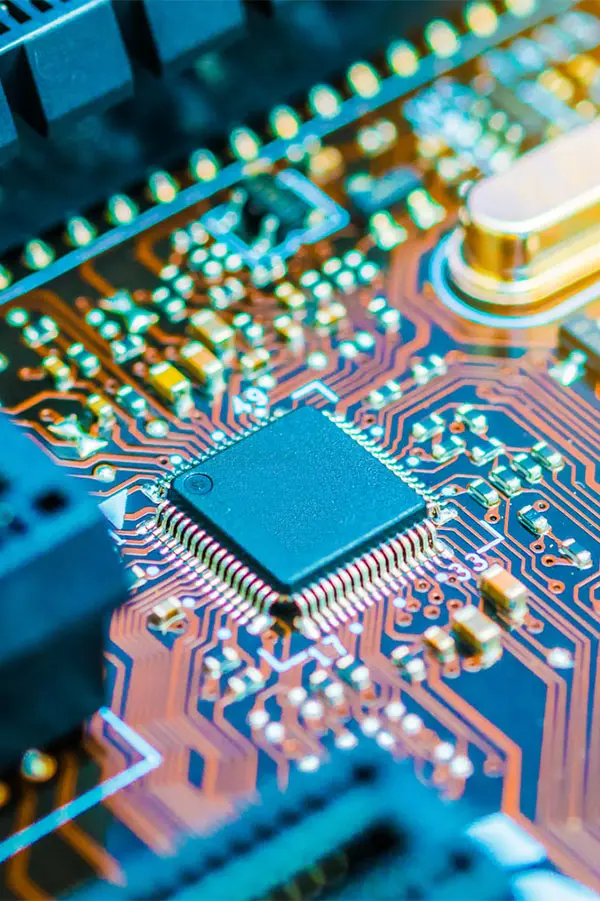
In electronics and semiconductors, miniaturisation, dimensional stability and surface quality are crucial. Components are becoming increasingly smaller, more complex and more functional. This requires moulds, cutting punches and precision components where every micron counts.
Tumag produces tooling and components for applications such as:
- connector housings and technical plastic carriers;
- sensor chambers and electronics housings;
- precision inserts and positioning parts;
- microstructures and fine details;
- cutting tools for thin or technical materials;
- precision-engineered parts for assembly and test setups.
By intelligently combining techniques such as HSM milling, sink EDM, wire EDM, profile grinding and cylindrical grinding, we realise complex contours, sharp details and reliable mating surfaces. For 2K and multi-component applications too, we work with you on material combinations, electrical insulation, sealing, wear zones and functional integration.
Moulds, cutting tools and precision parts under one roof
For high-tech customers, it is important that engineering, production and quality control are perfectly aligned. That is why Tumag works as an integrated tooling partner. We contribute ideas from the design phase onwards and critically analyse which production technique best suits the function of the component.
| Solution | Application within the high-tech industry |
| Injection molds | Technical plastic parts, 2K components, prototypes and small series |
| Cutting dies | Precise punching and cutting operations for technical materials |
| Precision parts | Precision-engineered components, prototypes, spare parts and assembly parts |
| EDM and HSM machining | Complex geometries, microdetails and hard materials |
| Quality control | Measurement reports, traceability and control down to micron level |
By combining these disciplines, we can move quickly between prototype, validation, optimisation and production.
Where components require permanent identification or type designation, we provide them with serial numbers, logos and Data Matrix codes using metal engraving.

Automotive and eco-racing: from solar to hydrogen racing
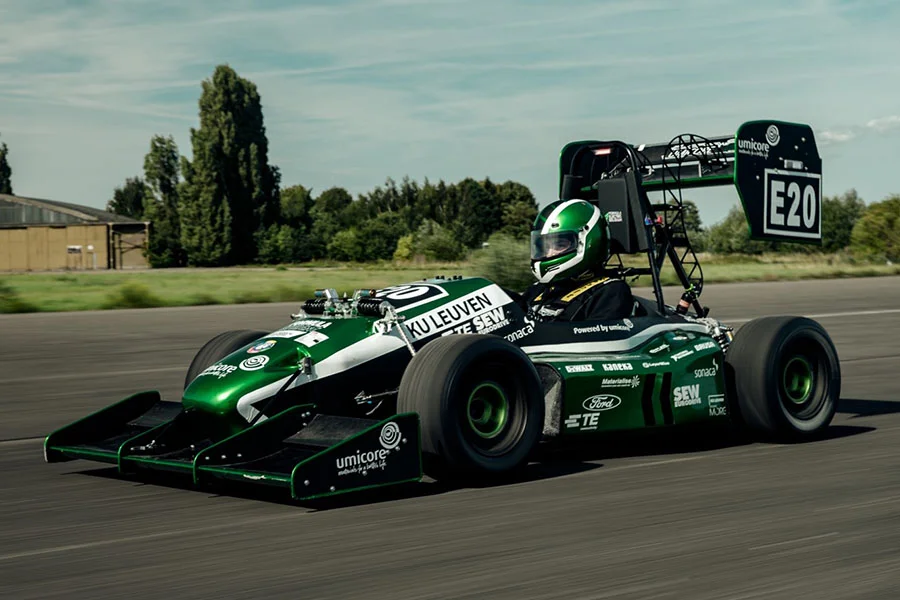
The automotive sector is rapidly evolving towards lighter, more efficient and more sustainable technologies. In eco racing, including solar racing, electric racing and hydrogen racing, the combination of low weight, high strength and reliable precision is highly important. Tumag has experience with projects in these innovative racing environments, where speed, efficiency and technical refinement come together. Because every gram counts, there is little room for deviation in dimensional accuracy: teams can have their parts measured for validation before assembling the structure or taking to the track.
For automotive and eco-racing applications, we supply, among other things:
- precision-engineered parts for testing and development projects;
- moulds for technical plastic components;
- cutting tools and dies for precise series parts;
- prototypes and small series;
- parts made from aluminium, tool steel, stainless steel, fibre-reinforced composites and technical plastics;
- components for lightweight structures and functional assemblies.
Our strength lies in translating technical challenges into manufacturable, sustainable solutions. In doing so, we take into account material behaviour, tolerances, loads, wear and reproducibility.
Frequently asked questions about the high-tech industry (FAQ)
Can Tumag help protect intellectual property during high-tech development projects?
Yes. Because engineering, production, quality control and any validation largely take place in-house in Belgium, sensitive designs and technical data remain within a controlled environment. This is important for companies working on innovative products, prototypes, R&D projects or competitive applications such as eco-racing and robotics. Short communication lines and local production also limit the risk of unwanted distribution of product information.
What role does material selection play in high-tech moulds and precision parts?
Material selection largely determines the service life, dimensional stability, wear resistance and performance of a component or tool. For moulds and cutting punches, hardened tool steels or wear-resistant alloys are often selected, while precision components may be made from aluminium, stainless steel, titanium, copper alloys or engineering plastics such as PEEK and POM. Tumag works with you to determine the right combination of material, machining technique and tolerances for the application.
You can read more about the factors that determine the service life of a mould in our guide on preventive mould maintenance.
Is local production in Belgium an advantage for high-tech companies?
For high-tech projects, local production often provides significant added value. Design changes, test results and technical optimisations can be discussed and implemented faster than with production at a great distance. Especially for prototypes, pilot series and critical tooling, this reduces lead times, communication risks and the chance of costly rework. For companies in Belgium, the Netherlands and Europe, Tumag therefore offers a flexible and reliable development partner nearby.
Can Tumag reproduce or improve existing high-tech parts?
Yes, in many cases existing parts can be reproduced, adapted or optimised. This can be done based on technical drawings, 3D models or measurements of an existing part. This is useful for spare parts, obsolete components, damaged tooling or improvement projects where a part needs to be made stronger, more precise or easier to produce. Thanks to the combination of reverse engineering, production and quality control, Tumag can approach such projects with a solid technical foundation.
How do I get from a 3D model to a functional high-tech prototype?
Tumag helps high-tech companies turn an initial idea, 3D model or technical design into a functional and manufacturable prototype. We contribute to manufacturability, material selection, tolerances and scalability, so that the prototype is not only suitable for testing but can also serve as a basis for later series production.
For plastic prototypes and validation series, Tumag offers significant added value with small-series injection moulding and an affordable mould for small series. Thanks to FlexMould, there is no need to invest immediately in a full production mould: only the product-forming inserts are custom-made. This keeps start-up costs limited, allows design changes to be implemented more quickly and makes it possible to test realistic parts in the final material using an industrial injection moulding process.
How can I shorten the lead time for tooling in a high-tech development project?
Lead time in tooling projects is most strongly influenced by three factors: the completeness of the design at the start, the number of iterations during validation and the distance between engineering and production. Involving a tooling partner early in the design process helps prevent costly correction rounds later on. Parallel engineering — where manufacturability, material selection and tolerances are already assessed before the final drawing — significantly shortens the overall cycle. Systems such as modular moulds with interchangeable inserts also make it possible to move quickly from prototype to validation series without building a complete new mould.