Services
Expert in small series injection moulding and trial moulding of engineering plastics
Flexible plastic injection moulding for small series and technical applications
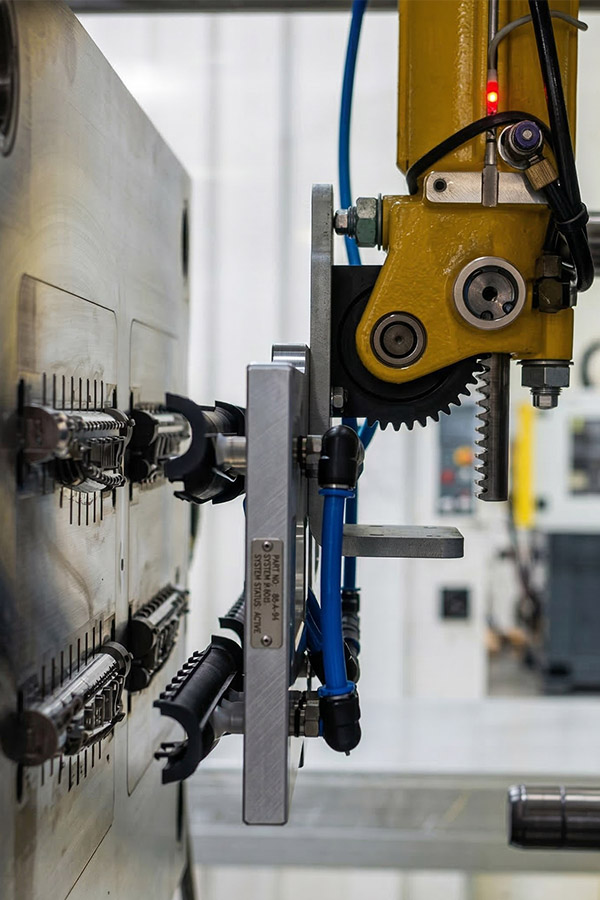
At Tumag in Turnhout (Belgium), we combine in-depth expertise in plastic injection moulding with extensive knowledge of mould making and high-precision manufacturing. Our injection moulding machines are mainly used for mould validation, trial moulding and process optimisation. This allows us to serve a specific niche flawlessly: small series injection moulding.
Many manufacturing companies are fully set up for mass production. As a result, small series, test production or product validation often do not fit easily into existing production lines. Tumag offers an efficient solution for this. We produce small series of plastic components and carry out trial moulding of moulds without disrupting your own production planning.
Companies choose Tumag when they:
- need small series of plastic components.
- want to test a new mould through professional trial moulding.
- want to process high-quality engineering plastics.
- want to prepare their production for large-scale injection moulding.
Specialist in small series injection moulding: from 50 to 10,000 pieces
Tumag specializes in small series injection moulding of engineering plastic components. Typical production volumes range between 50 and 10,000 parts, but depending on the project, we can also produce larger volumes.
For many companies, this type of production is a logistical challenge. Injection moulding lines are typically optimized for high-volume production, making small orders inefficient or disruptive.
By outsourcing this type of production to a specialized partner such as Tumag, companies can optimize their own production capacity for mass production, while keeping small orders and test series fully under control.
Our injection moulding capacity is used, among others, for:
- 0-series during the critical phase of product development.
- pre-series for validation before actual mass production.
- small, specialised production orders.
- temporary bridging of production capacity.
- pre-production inventory management


Processing of high-quality engineering plastics and high-performance polymers
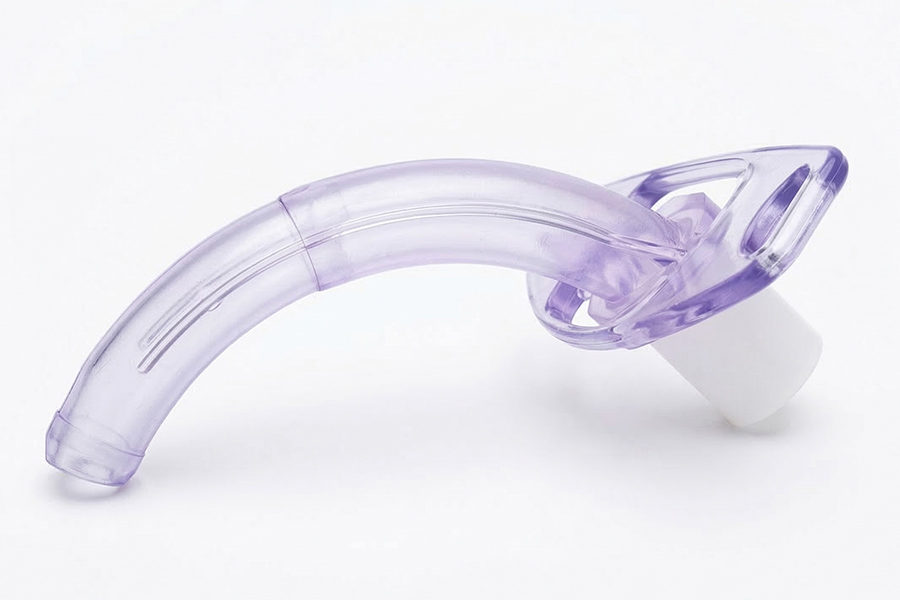
In addition to conventional plastic injection moulding, Tumag specializes in processing high-performance engineering plastics. These materials are used in sectors such as the high-tech, medical and aerospace industries, where standard plastics do not meet the required mechanical properties.
Processing these complex plastics requires specific knowledge of material behaviour (such as shrinkage and flow characteristics), mould design and precise process settings. Thanks to our dual expertise in both injection moulding and mould making, we ensure reliable processing of:
- Polyamide-imide (PAI) and PEEK: for extreme temperature resistance.
- Liquid Crystal Polymer (LCP): for very thin-walled, complex components.
- PPSU, COC, PPS and PEI: for specific chemical or medical resistance.
- PA 4.6 and PA 6.6: for mechanically highly loaded components.
Of course, we also process common thermoplastics such as PP, PA, ABS and PC.
Injection moulding of fibre-reinforced plastics (composites)
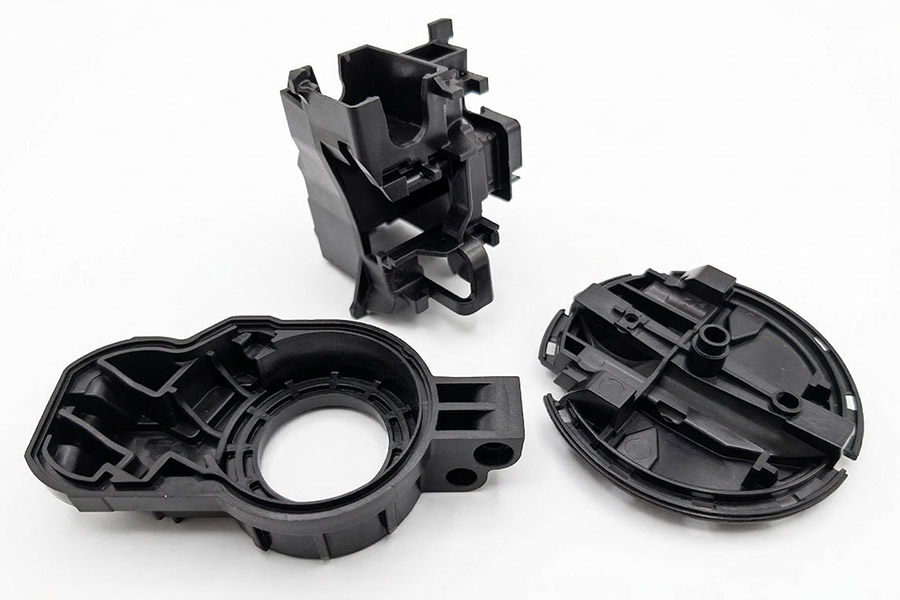
Fibre-reinforced plastics do not form a separate chemical category. They are created by adding fibres—such as glass fibre (GF) or carbon fibre (CF)—to existing base plastics.
A well-known example is PA6-GF30 → Polyamide 6 with 30% glass fibre
This combination significantly enhances the properties of the base material:
-
Higher stiffness
-
Higher tensile strength
-
Better temperature resistance
Thanks to these improvements, fibre-reinforced plastics can:
-
approach the performance of more expensive, high-performance plastics
-
In some applications, even replace metal
Which plastics can you process at Tumag?
Below are several lists of plastics with their main material properties that we can process at Tumag.
Category 3: High-performance plastics
Extreme temperature resistance, chemical inertness, often replaces metal.
| Abbreviation | Full name | Key properties | Processing temperature |
|---|---|---|---|
| PEEK | Polyetheretherketone | Extreme heat resistance, chemical resistance, very high strength. | 350°C – 400°C |
| PEI | Polyetherimide | Excellent dielectric properties, flame-retardant. | 340°C – 400°C |
| PPSU | Polyphenylsulfone | Impact-resistant, withstands repeated sterilisation (medical). | 360°C – 390°C |
| PAI | Polyamide-imide | Highest strength at high temperatures, extremely wear-resistant. | 330°C – 360°C |
| LCP | Liquid Crystal Polymer | Very low viscosity (ideal for thin-walled parts), excellent flow properties. | 280°C – 350°C |
| PPS | Polyphenylene sulfide | High stiffness, very good chemical resistance. | 300°C – 340°C |
| PTFE | Polytetrafluoroethylene (Teflon) | Extremely low friction, chemically inert, non-stick. | 360°C – 390°C (sintering) |
Category 2: Engineering plastics
Good mechanical strength, dimensional stability and durability.
| Abbreviation | Full name | Key properties | Processing temperature |
|---|---|---|---|
| PC | Polycarbonate | Crystal clear, very high impact resistance (virtually unbreakable). | 270°C – 320°C |
| PA 4.6 / 6.6 | Polyamide (Nylon) | High mechanical strength, toughness and wear resistance. | 260°C – 310°C |
| PA (6) | Polyamide 6 | Good balance between strength and cost, versatile. | 230°C – 280°C |
| POM | Polyoxymethylene (Delrin) | Very high dimensional stability, low friction (ideal for gears). | 190°C – 230°C |
| ABS | Acrylonitrile-butadiene-styrene | Good impact resistance, easy to machine and paint (housings). | 200°C – 250°C |
| COC | Cyclic Olefin Copolymer | Optically very transparent, biocompatible, moisture-resistant. | 230°C – 300°C |
| PET | Polyethylene terephthalate | Very strong and dimensionally stable (used not only for bottles but also widely in fibres and films). | 250°C – 290°C |
Category 1: Standard plastics (commodity plastics)
Mass production, low cost, lower heat resistance.
| Abbreviation | Full name | Key properties | Processing temperature |
|---|---|---|---|
| PP | Polypropylene | Lightweight, reasonably chemically resistant, “living hinge” possible. | 200°C – 260°C |
| PE | Polyethylene (HDPE/LDPE) | Very low cost, tough, impact-resistant, flexible at low temperatures. | 160°C – 240°C |
| PVC | Polyvinyl chloride | Very low cost, naturally flame-retardant (pipes, profiles). | 160°C – 210°C |
| PS | Polystyrene | Low cost, brittle, very clear (often used in disposables and packaging). | 180°C – 250°C |
Fibre-reinforced plastics
| Abbreviation | Base material + reinforcement | Key properties | Processing temperature |
|---|---|---|---|
| PA6-GF30 | Polyamide 6 + 30% glass fibre | The industry standard. Very high stiffness, excellent creep resistance, widely used in the automotive industry (e.g. engine covers). | 250°C – 290°C |
| PA66-GF30 | Polyamide 6.6 + 30% glass fibre | Engels: Even higher temperature resistance and mechanical strength than PA6-GF30, excellent wear resistance. | 280°C – 310°C |
| PP-GF30 | Polypropylene + 30% glass fibre | Lightweight, chemically resistant, significantly stiffer than standard PP, and much more cost-effective than PA composites. | 220°C – 270°C |
| PC-GF20 | Polycarbonate + 20% glass fibre | Very high dimensional stability, stiff, significantly reduced shrinkage. Note: it does lose the typical transparency of standard PC. | 300°C – 330°C |
| PEEK-CF30 | PEEK + 30% carbon fibre | Extreme strength-to-weight ratio, flame-retardant, electrically conductive, highest possible thermal and mechanical performance (often replaces metal in aerospace). | 360°C – 400°C |
| ABS-CF20 | ABS + 20% carbon fibre | Increased stiffness, lighter than glass fibre variants, good antistatic properties (often used for ESD-safe housings). | 220°C – 260°C |
| POM-GF25 | Polyoxymethylene + 25% glass fibre | High stiffness combined with the naturally good wear resistance of POM. Widely used for rigid, technical precision components. | 200°C – 230°C |
Trial moulding and mould validation
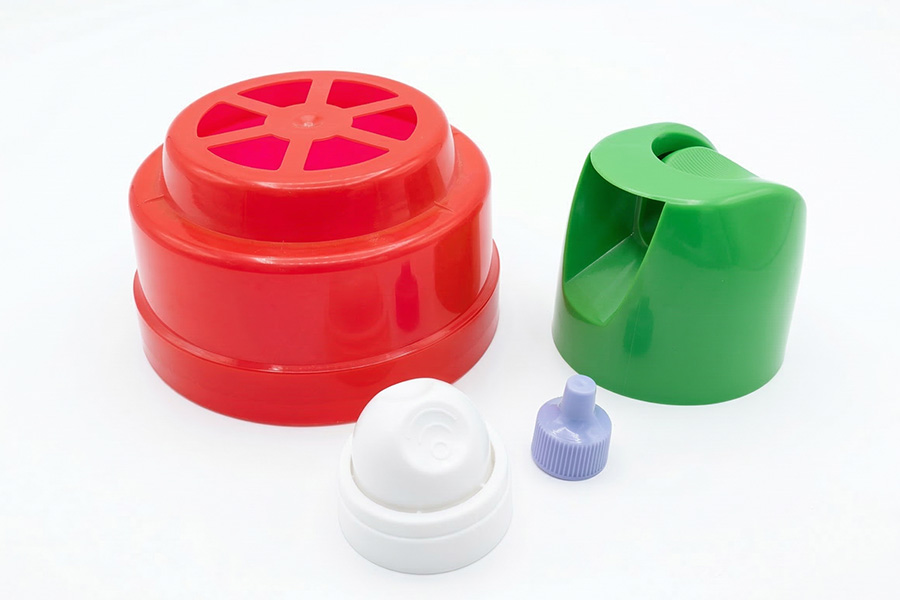
An essential part of our services is trial moulding of moulds. New moulds must be thoroughly validated before running thousands of production hours. During trial moulding, we analyse all parameters of the injection moulding process to understand how the material behaves and where optimisation is needed. During these validation tests, we examine:
- Filling behaviour: How does the plastic flow into the mould cavities?
- Process stability: Is production consistent over a longer period of time?
- Product quality: Do the dimensions and surface finish meet the specifications?
- Mould optimisation: Which adjustments increase output or service life?
We test both internally developed moulds and external moulds from customers. Our in-house expertise in mould maintenance allows any necessary corrections to be carried out immediately, significantly reducing time-to-market.
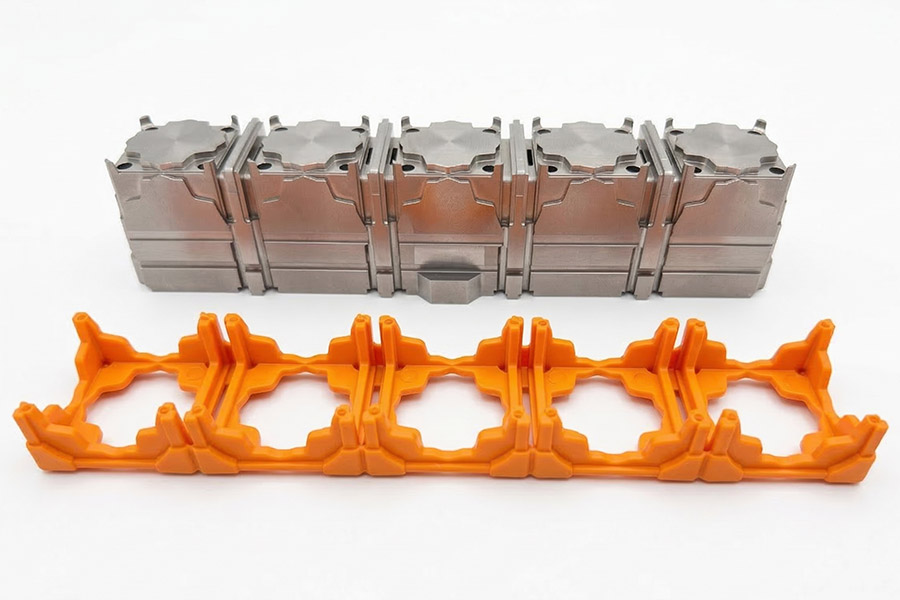
Technical innovation with Tumag FlexMould
Our injection moulding department is equipped with modern machines (35 to 200 tons clamping force) and flexible systems. A key advantage for our customers is the Tumag FlexMould mould system.
Why choose FlexMould? This innovative system makes it possible to produce different product variants or prototypes using just one base mould structure. Instead of building a complete mould for each part, only the moulding inserts need to be adapted. This results in:
- Lower investment costs per product variant.
- Faster lead times for design changes.
- Efficient validation of different geometries.
In addition, we offer advanced techniques such as 2K injection moulding (two-component) and highly precise injection moulding with very low shot volumes for micro-components.
Frequently Asked Questions about Injection Moulding (FAQ)
What is the minimum order quantity for small-series injection moulding at Tumag?
Although we are flexible, our series typically start from approximately 50 units. Our expertise lies in the range of 50 to 10,000 components, where precision and engineering plastics are central.
What advantages does trial injection moulding offer my company?
Trial injection moulding prevents costly errors during mass production. By validating your mould with us first, we optimize the process parameters and mould settings, enabling your own production lines to start immediately at full speed with minimal scrap.
Can Tumag also process high-performance plastics such as PEEK or PAI?
Yes, we specialize in high-performance polymers (engineering plastics). These materials require higher processing temperatures and specific mould expertise, for which our facilities and experts are fully equipped.
How does the FlexMould system help reduce costs?
With FlexMould, you do not need to produce a complete mould for every new component. By using a universal master system and only changing the inserts, you significantly reduce tooling costs and development time.
Do you also offer 2K injection moulding (two-component moulding) for small series?
Certainly. Our machines are suitable for 2K injection moulding, where two different plastics or colors are combined in a single process step. This is ideal for complex technical components that require, for example, a rigid core and a soft finish (overmoulding).